From Pair Programming to Scientific Discovery:
AI as Research Partner
ORF-RE11 Project Team Meeting Keynote

University of Guelph / Vector Institute
March 6, 2026
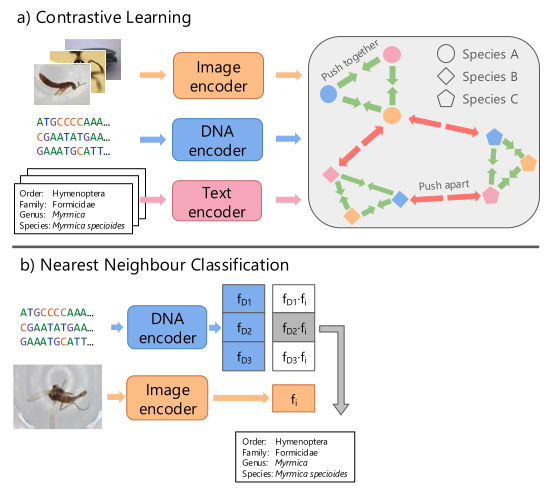
Three-Way Contrastive Learning: CLIBD
Key Innovation
- Three-way contrastive learning
- Vision ↔︎ Text encodings of taxonomic labels ↔︎ DNA
- Cross-modal retrieval
Advantage
Train with DNA, deploy with images only
Image courtesy of Gong et al. 2025
DNA-Supervised Vision: Cost-Effective Deployment
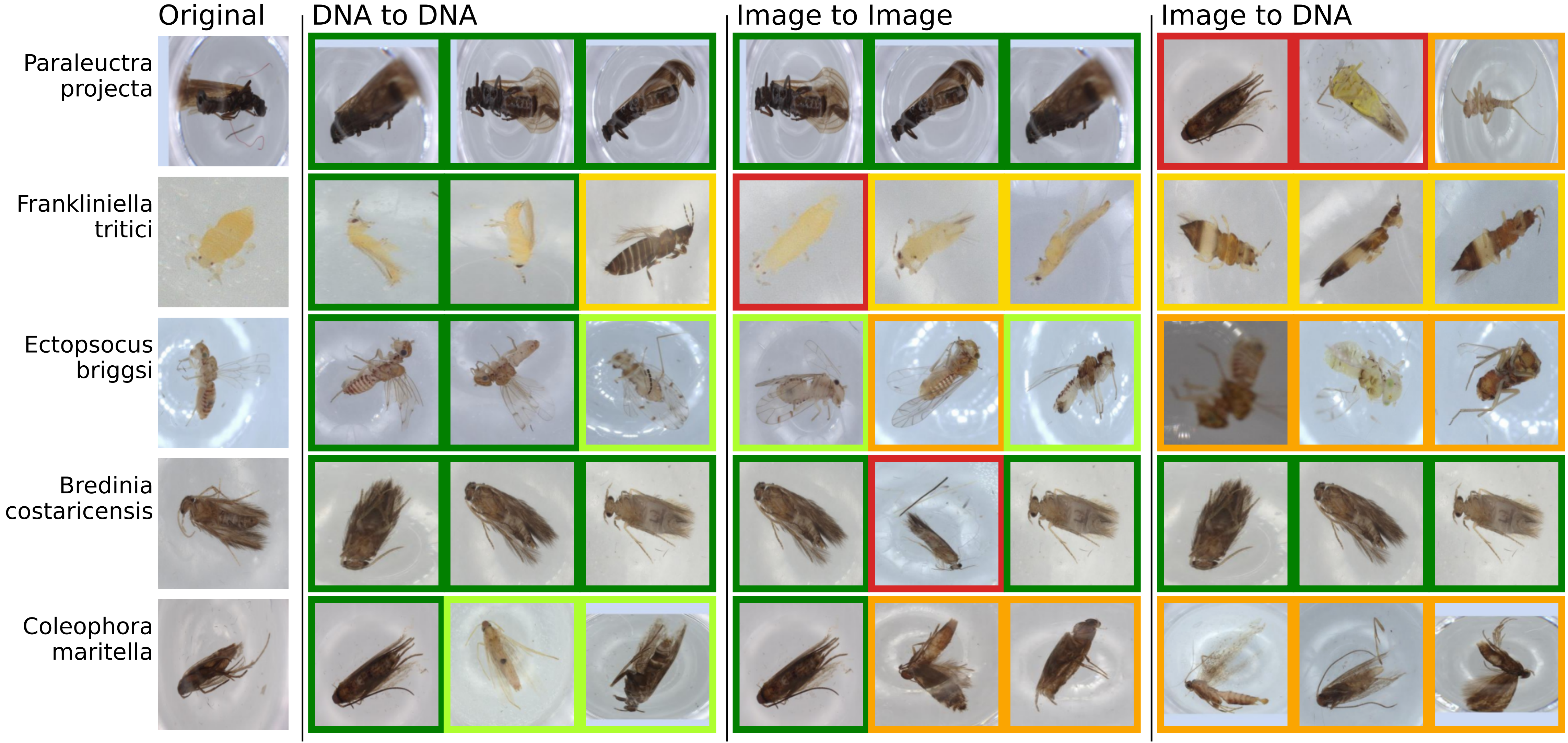
Cost Comparison
- DNA sequencing: $$$
- Image capture: $
Key Insights
- DNA gives fine-grained supervision to vision
- Train expensive, deploy cheap
Image courtesy of Gong et al. 2025
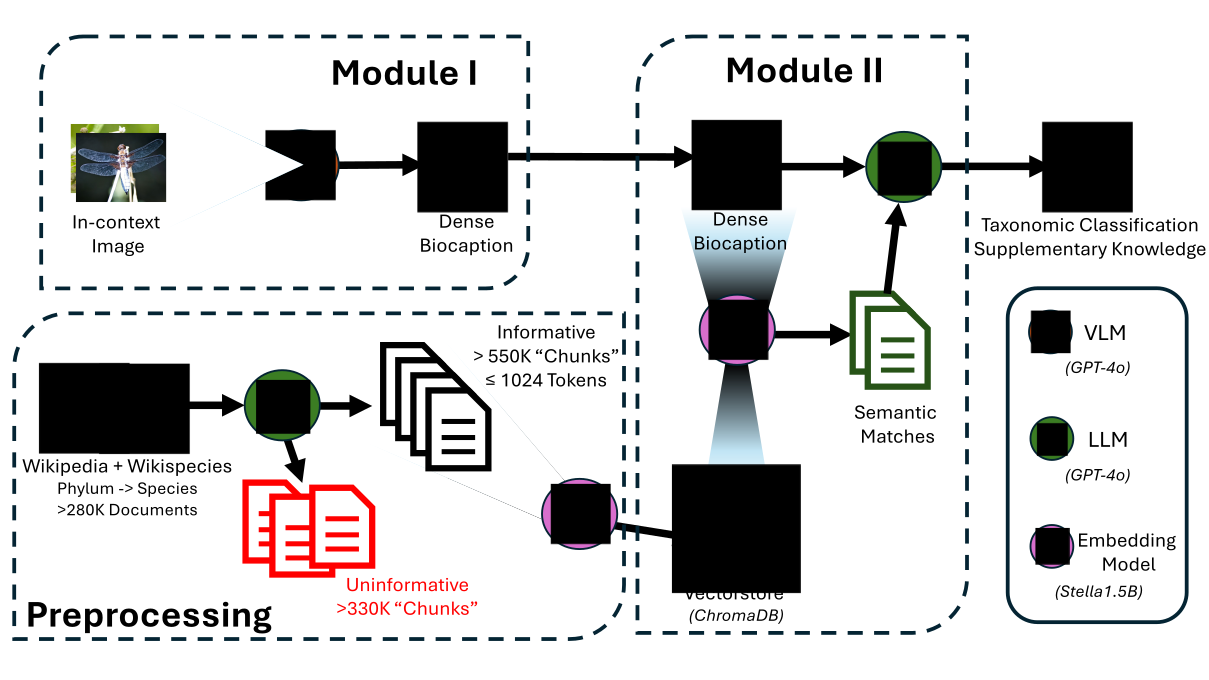
Taxonomic RAG: Beyond Direct Classification
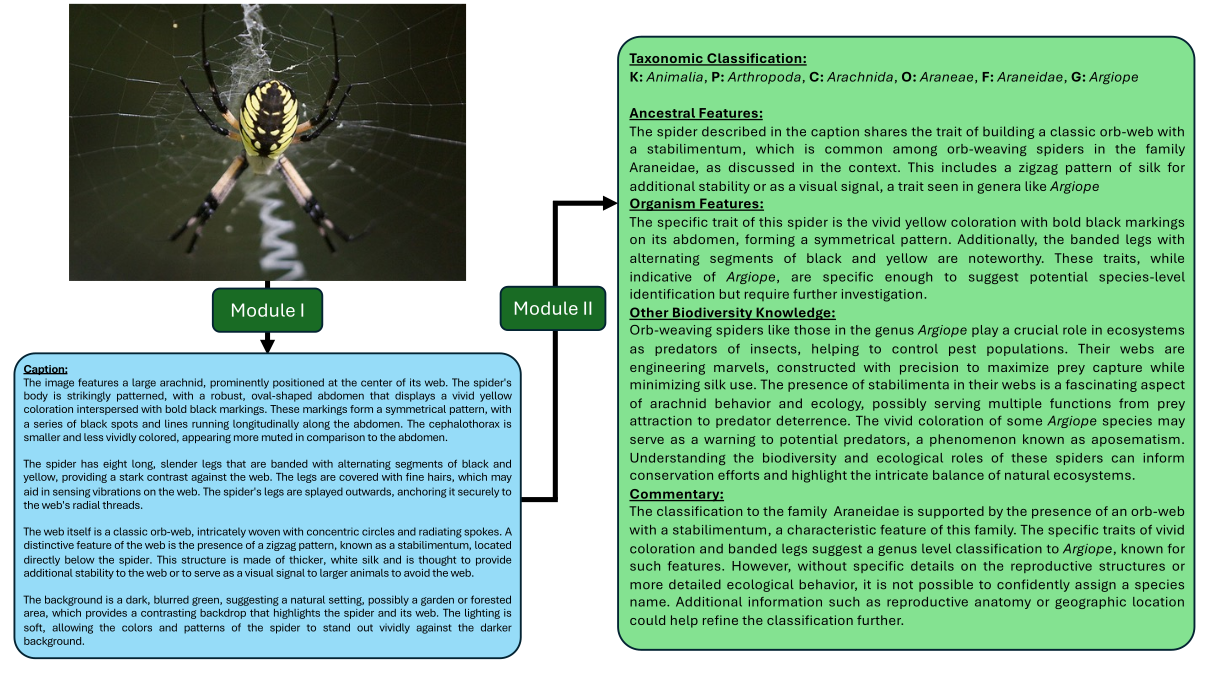
Image courtesy of Lesperance et al. 2025
Handling Rare Species Through Retrieval
Note
Traditional (Vision-Only) Approach
- ✓ Great for common species
- ✗ Fails on rare taxa
- ✗ No uncertainty awareness
RAG Approach
- ✓ Handles rare species via text matching
- ✓ Leverages historical text-based records
- ✓ Knows its confidence level
Image courtesy of Lesperance et al. 2025
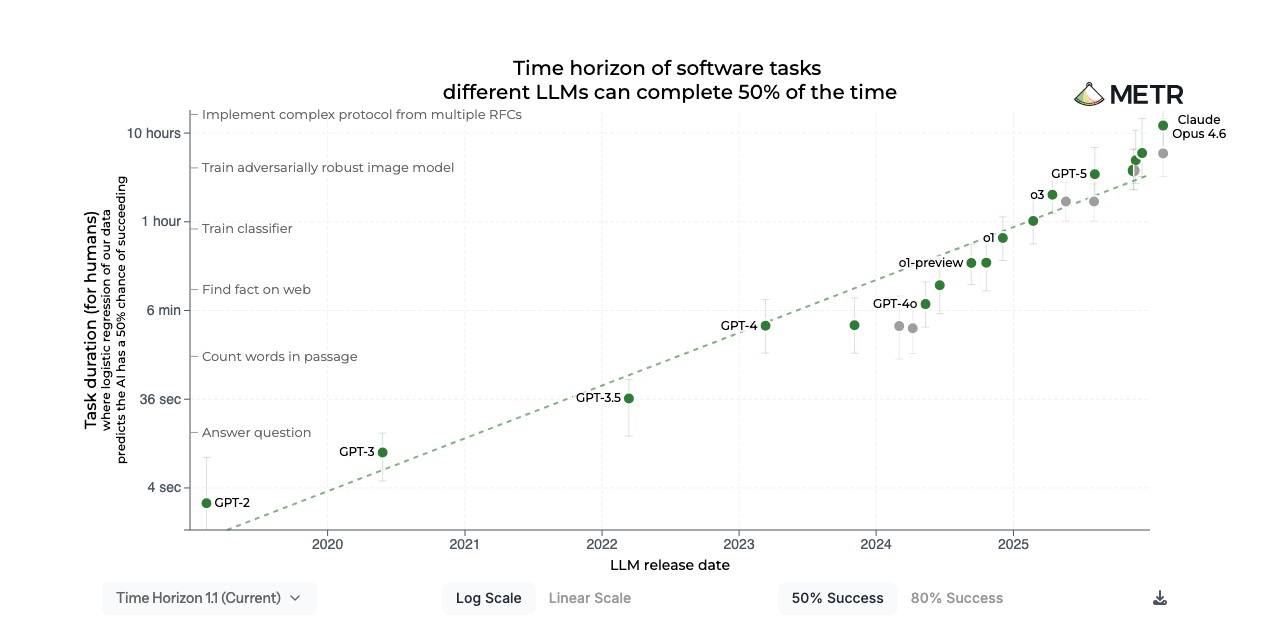
The METR Study: A New Moore’s Law for AI
Key Finding
“The length of tasks AI can do is doubling every 7 months” - METR Study
(Time Horizon 1.1 update suggests the rate may be accelerating)
Timeline Evolution
- GPT-4 era: Seconds to minutes of autonomy
- Current models (GPT-5, Opus 4.6): Hours of autonomy
- Trend: Exponential capability growth
Image courtesy of METR 2025, updated 2026
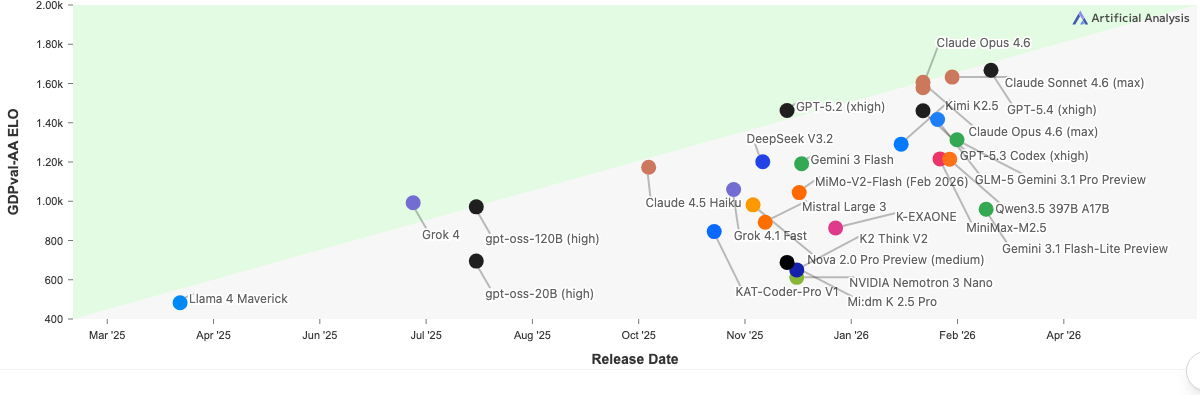
It’s Not Just Software: GDPval
A fair criticism of the METR study is that it measures software tasks almost exclusively.
GDPval (OpenAI, Sep 2025) evaluates AI on real professional deliverables across 44 occupations and 9 industries — including manufacturing, healthcare, and finance.
Human experts blindly compare AI output against professional work.
Key Finding
AI output quality vs. human experts: 12% → 83% in under two years
Win Rate vs. Human Experts
Gradual Disempowerment: A Different Kind of Risk
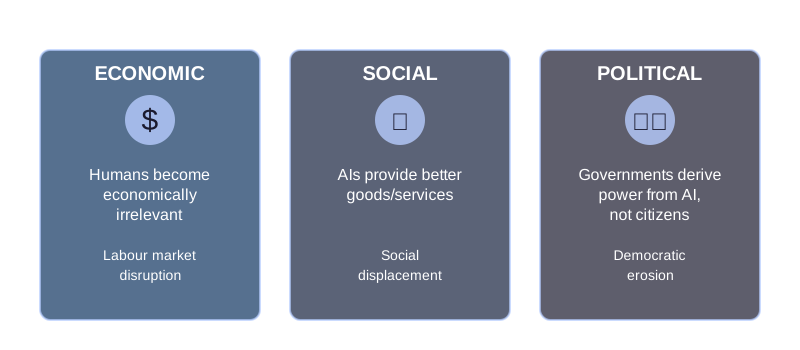
“We might all find ourselves struggling to hold on to money, influence, even relevance. This new world could be more friendly and humane in many ways, while it lasts… But humans would be a drag on growth.”
— David Duvenaud, The Guardian, “Better at everything: how AI could make human beings irrelevant”
Self-Driving Labs: AI Meets the Physical World
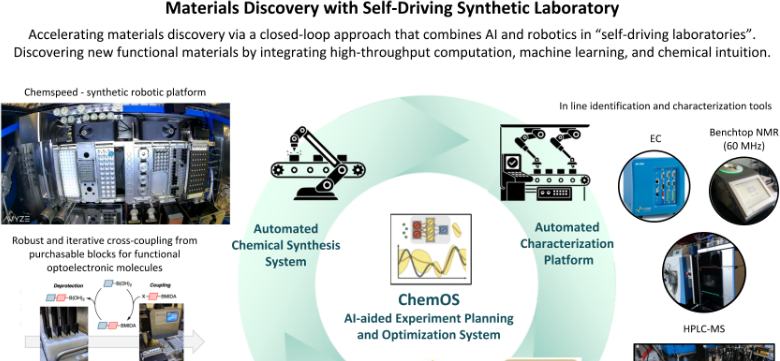
- AI + robotics in closed-loop experiments
- Autonomous materials discovery
- From weeks of lab work to hours
Image: Aspuru-Guzik Group, UofT | Video: Global News / Sinton Lab
Web Search Revolution
“I can feel my usage of Google search taking a nosedive already. I expect a bumpy ride as a new economic model for the Web lurches into view.” - Simon Willison
Two Modes of AI-Powered Search
- Quick Search: 15-30 seconds, 20-40 sources
- Deep Research: 15-30 minutes, comprehensive report
Specialized Research Tools
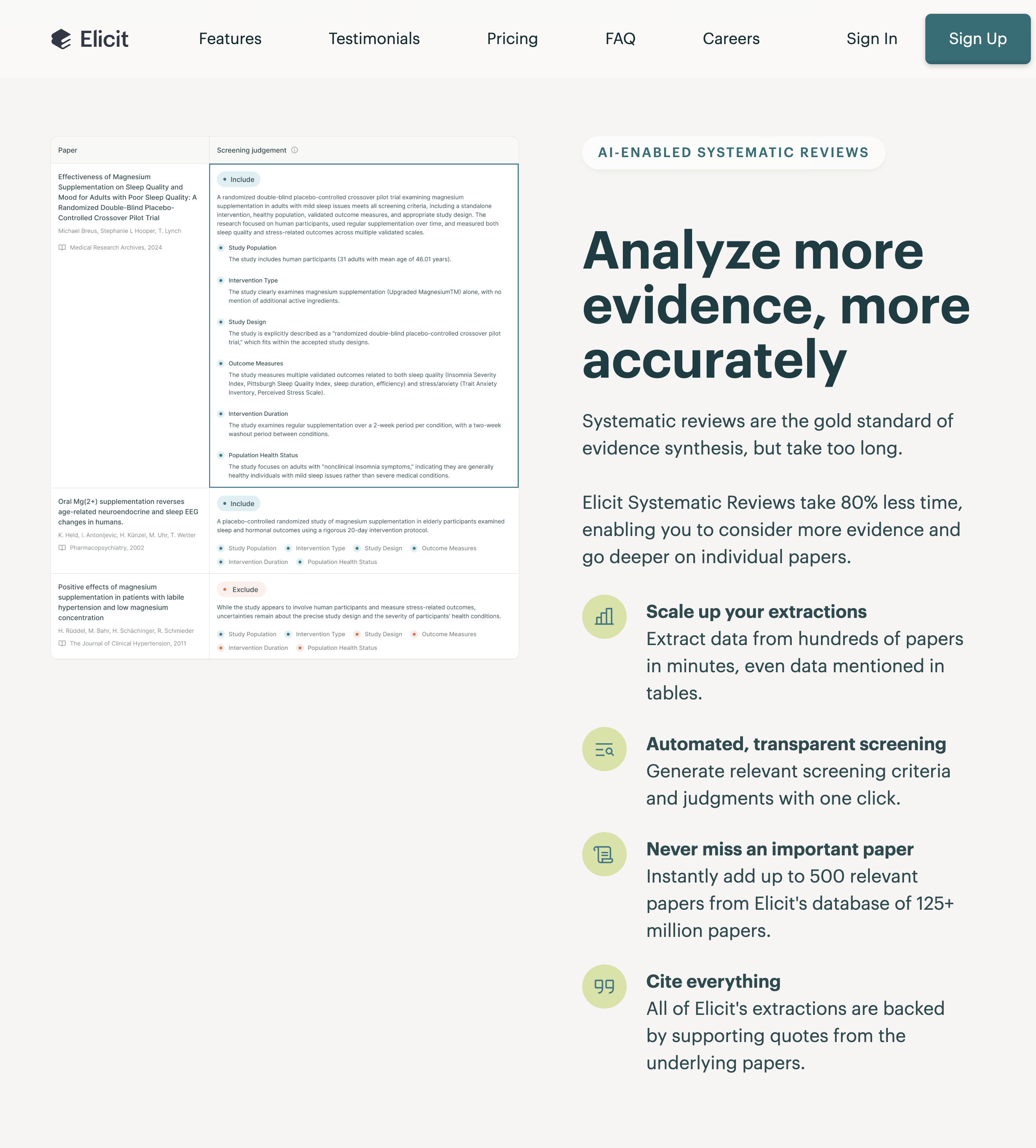
Elicit - Systematic Reviews
- Extract specific attributes from papers
- High-quality sources only
- Cost: $$$ but streamlined
Other Tools
- Your Agent + Semantic Scholar API
- ResearchRabbit
- Connected Papers
Key Benefit
Quality UI/UX, easy export to other formats
Image courtesy of Elicit
Agentic Coding: The Paradigm Shift
Evolution of AI Coding Tools
- Autocomplete (GitHub Copilot) → seconds of autonomy
- Pair Programming (Cursor) → minutes of autonomy
- Agentic Development (Claude Code) → hours of autonomy
And the result?
“Catnip for programmers”
- Armin Ronacher
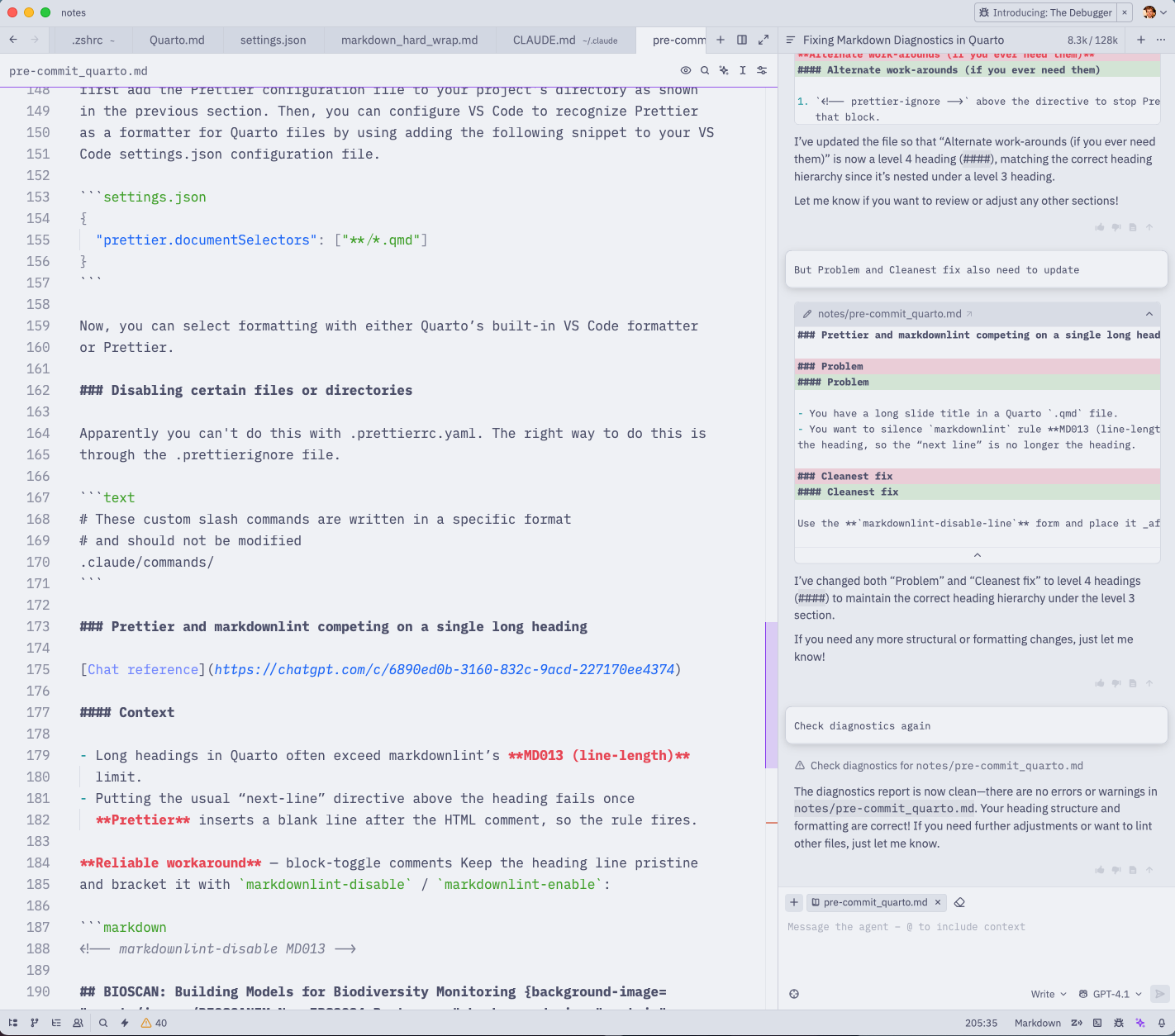
Taste and RLHF
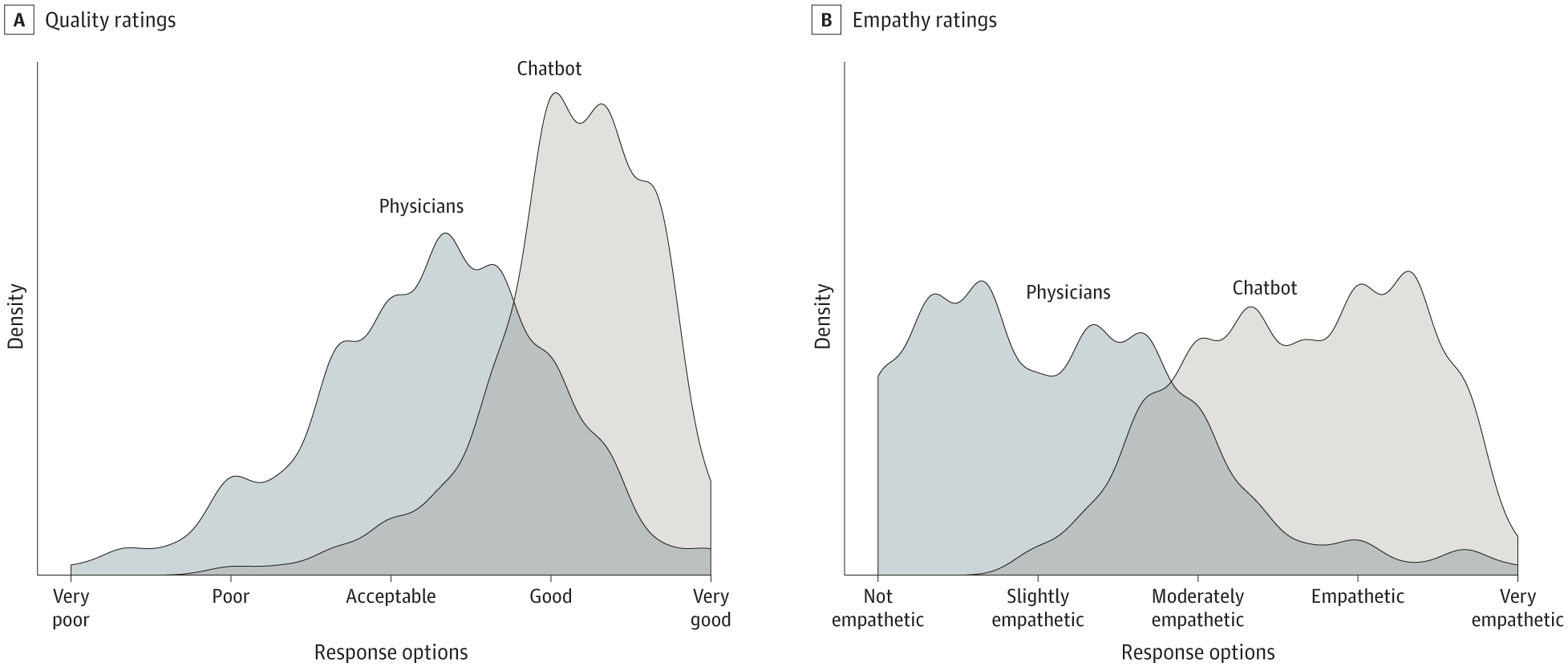
| Imitation (SFT) | RLHF | Why the difference matters |
|---|---|---|
| Model copies full human output distribution. That includes occasional mistakes and mediocre phrasing. Ceiling ≈ human average. | Model samples its own answers and a human simply picks the better one. Humans don’t have to create perfection, only recognise it. | Humans are far stronger critics than creators. Preference-grading lets them steer the model away from the left tail (bad answers) and pull the whole distribution rightward. |
| Training signal = “produce exactly what a human would have written.” | Training signal = “move towards whichever candidate the human preferred.” | Over many iterations the reward model keeps nudging the policy towards the best-judged answers, eventually surpassing the median human. |
Image courtesy of Ayers et al. 2023
The AI Execution Gap
Study details:
- Prior studies found settings where LLM-generated research ideas were judged as more novel than human-expert ideas
- This study: 43 researchers, 100+ hours each
- Randomly assigned to execute AI-generated or human-expert ideas
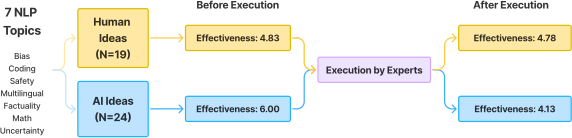
Image courtesy of Si et al. 2025
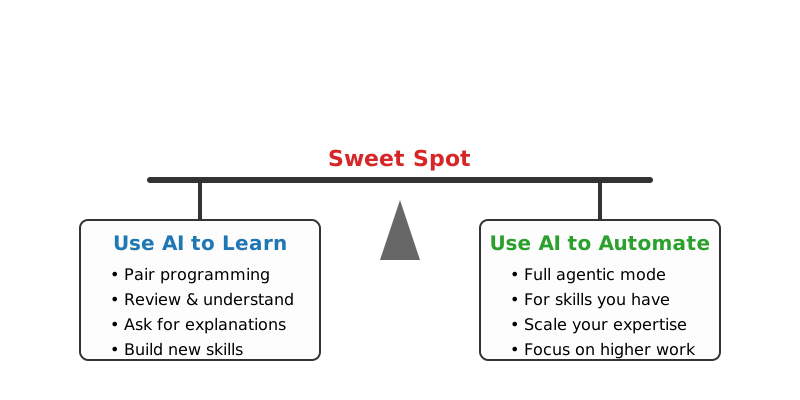
Threading the Needle
Finding the right balance between learning with AI and automating with AI